Ocular surface and translational research in Ophthalmology
The group is characterized by "bench and bedside" research on tissues and fluids of the eye-- in particular tears, conjunctival and corneal cells, secretions of the meibomian glands, cell cultures, and in vitro organ cultures, as well as in vivo research conducted in an outpatient area equipped with specific instrumentation for the ocular surface.
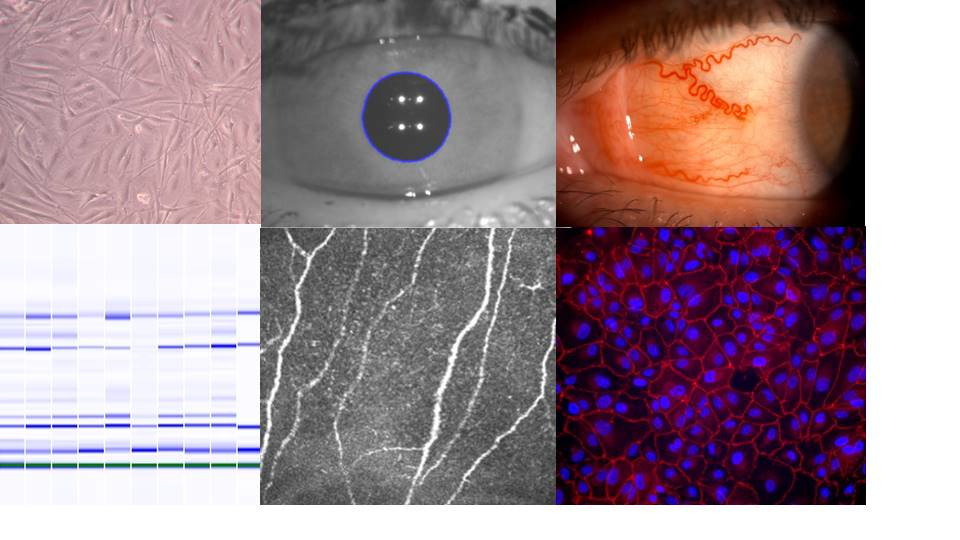
Research areas:
Physiopathology of the ocular surface, with particular reference to dry eye disease and its associations with systemic diseases (Graft Versus Host Disease after transplantation of hematopoietic stem cells, Sjogren's Syndrome).
- In vitro models of induced dry eye disease (primary and inline cells of the human conjunctiva and cornea)
- Clinical studies in collaboration with IRCCS AOUBO S. Orsola, Hematology Unit, Program of Rheumatology
- Human and animal ocular microbiota and how it is influenced by the environmental
- Imaging of clinical parameters of the ocular surface
Medical substances (tear substitutes) and blood components for non-transfusion use (EUNT) for the treatment of ocular surface diseases.
- Characterization of biological and EUNT products from fresh and freeze-dried cord blood, for the treatment of severe keratopathies.
- Microbiology Unit, Mycology Laboratory.
- In vivo models of dry eye induction by hyper-evaporative stress (and experimental treatments).
- Biomaterials for the controlled release of growth factors to improve the healing of post-transplant surgical wounds
Laboratory medicine applied to diagnostics for biological fluids sampled in small quantities, with particular reference to human tears and saliva and the applications of Lab-on-a-chip microfluidics.
Currently the group focuses its research on biomarkers, predictors of early diagnosis, and indicators of therapeutic outcomes in ocular surface diseases.
- Standardization of tear sampling in a clinical setting
Neurodegenerative diseases and neuroprotection mechanisms.
- In vitro models of co-cultures of retinal glia and retinal pigment epithelium cells
- Use of cord blood EUNT-derived neurotrophic factor pools in retinal glia cell-mediated neuroprotection mechanisms
- A. I. applied to measurements of pupillary movement parameters and electroretinography
In the laboratory, there is a tear fluid sample bank called "IRCCS TEAR FLUID BIOBANK," in collaboration with IRCCS AOUBO Policlinico di S. Orsola.
responsible
-
Associate Professor
Dipartimento di Scienze Mediche e Chirurgiche - DIMEC
Via Massarenti 9
Bologna (BO)
Tel: +39 051 2142850
Fax: +39 051 636 2 846
TEAM
Chiara Coslovi
Area dei Collaboratori - Settore socio-sanitario
Collaborators
Claudia Pancani - TdLB, AOSP, team member
Gloria Astolfi - Università di Bologna grant holder, team member
Dr. Francesca Bonifazi, Dr. Mario Arpinati - UO di Ematologia
Dr. Marco Fusconi, Dr. Gentiana Vukatana - Programma di Reumatologia
Dr. Antonella Marangoni, Dr. Claudio Foschi, Dr.ssa Monica Cricca - UO di Microbiologia
Prof. Alessandra Scagliarini - UNIB-OH One Health International Study Centre
Centre for Applied Biomedical Research - CRBA
Prof. Emanuela Marcelli, Adj. Prof. Nico Curti, Adj. Prof. Enrico Giampieri - eDIMES Lab
Dr. Marina Buzzi - Regional bank of cord blood, cardiovascular tissue, gametes, and donated tissue and organs
Prof. Laura Calzà, Dr. Luca Lorenzini - CIRI-Scienze della Vita e Tecnologie per la Salute-Medicina Traslazionale
Prof. Nadia Lotti, Dr. Michelina Soccio - Department of Civil, Chemical, Environmental and Materials Engineering - DICAM
Prof. Gianandrea Pasquinelli, Dr. Carmen Ciavarella, Dr. Sabrina Valente, Dr. Ilenia Motta - Laboratorio di Patologia Clinica Università di Bologna – Nefro-Vaso Path
Prof. Aldo Roda, Dott. Emanuele Porru - Department of Chemistry "Giacomo Ciamician”
Prof. Gastone Castellani - Alma Mater Research Institute for Human-Centered Artificial Intelligence